
Every Construction Site Has a Different Theft Story
Two construction projects can be only five minutes apart in Calgary, yet one experiences repeated tool theft while the other completes without a single security incident.
Why?
Many contractors believe theft is random. In reality, most construction theft follows patterns. Criminals often look for predictable opportunities rather than expensive equipment. They watch routines, identify weak access points, learn delivery schedules, and return when the chance of getting caught is lowest.
Instead of asking:
“How can we stop theft after it happens?”
a better question is:
“Can we identify risk before thieves choose our site?”
That is the idea behind creating a Calgary Construction Theft Map.
This is not an official city crime map. Instead, it is a practical planning method that builders, developers, project managers, and site supervisors can use to evaluate theft risks around every project before work begins.
Using a theft map allows construction companies to make better decisions about fencing, lighting, mobile patrol timing, CCTV placement, material storage, and worker routines.
When paired with professional Construction Site Security Calgary services, this approach helps reduce avoidable losses while improving project continuity.
Why Looking at One Theft Incident Never Gives the Full Picture
Imagine hearing about a stolen skid steer from another contractor.
Most companies simply think:
“That happened somewhere else.”
A smarter approach asks different questions.
- What stage was that project in?
- Was the equipment visible from the road?
- Were there nearby escape routes?
- Was fencing complete?
- Did workers leave at the same time every evening?
- Were expensive tools delivered days before installation?
These details reveal patterns.
Individual thefts rarely tell the whole story.
Clusters of similar situations reveal opportunities criminals repeatedly exploit.
A Calgary Construction Theft Map focuses on opportunities—not only incidents.
Think Beyond Neighbourhood Crime Rates
Many companies choose security based only on the area’s reputation.
That can create blind spots.
A project in a lower-crime neighbourhood may actually face greater theft exposure because:
- New roads provide quick vehicle access
- Empty adjacent lots reduce natural surveillance
- Equipment remains onsite overnight
- Multiple subcontractors use temporary access gates
- Storage containers sit near public roads
Meanwhile, a downtown project may experience fewer equipment thefts because:
- Constant public activity increases visibility
- Lighting remains active
- Nearby businesses operate late
- Traffic discourages large equipment removal
Risk depends on site conditions more than postal codes.
Many contractors also combine this planning method with mobile patrol security services to monitor changing risks during evenings, weekends, and holidays.
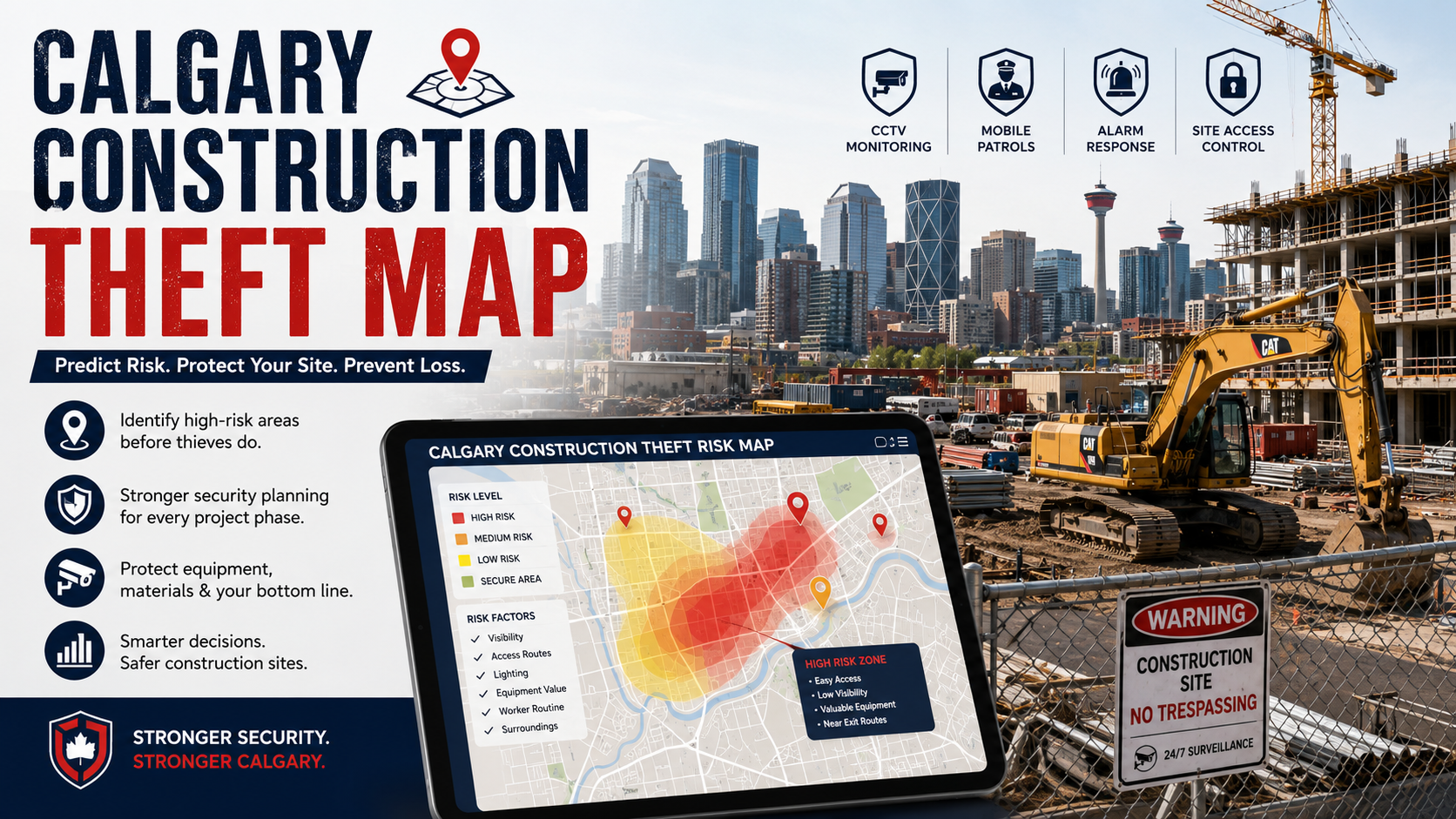
Building Your Own Calgary Construction Theft Map
Instead of colouring areas red or green, score each project using practical risk indicators.
Consider these categories.
1. Site Visibility Score
Ask yourself:
Can someone standing outside easily see valuable equipment?
Visible assets attract attention.
Poor visibility can also create hidden corners where unauthorized people enter unnoticed.
Balance is important.
Good visibility for surveillance.
Limited visibility of valuable equipment.
2. Equipment Attraction Score
Not every machine attracts thieves equally.
Higher-risk items often include:
- Power tools
- Copper wire
- Generators
- Compact loaders
- Fuel tanks
- Batteries
- Laser equipment
- Temporary electrical panels
Mapping which equipment arrives during each construction phase helps determine when security should increase.\
3. Access Route Score
Many thefts succeed because leaving the site is easy.
Questions include:
- How many vehicle exits exist?
- Can trucks reverse directly to storage containers?
- Are temporary roads open overnight?
- Are gates left unlocked for deliveries?
Every easy escape route increases opportunity.
4. Lighting Score
Light alone does not stop crime.
Poor lighting creates blind zones where thieves feel comfortable working.
Effective lighting should eliminate:
- Fence shadows
- Container blind spots
- Equipment storage darkness
- Parking lot corners
Lighting works best when combined with surveillance.
5. Worker Routine Score
Criminals often observe workers before attempting theft.
Patterns they notice include:
- Daily lunch breaks
- Weekend shutdowns
- Friday early departures
- Shift changes
- Material deliveries
- Garbage collection
Changing predictable routines makes planning theft much harder.
The Hidden Risk Most Contractors Forget
Many security discussions focus only on nights.
However, theft frequently begins during business hours.
Examples include:
Someone wearing a reflective vest loads tools into a truck.
Workers assume the person belongs to another subcontractor.
Nobody asks questions.
The equipment disappears before lunch.
This type of theft rarely involves breaking fences.
It relies on confusion.
Construction projects involving many contractors should always have:
- Visitor verification
- Delivery confirmation
- Equipment sign-out procedures
- Temporary identification systems
Good security starts long before sunset.
Construction Phases Have Different Theft Risks
One security plan cannot protect every stage equally.
Each phase creates different vulnerabilities.
Site Preparation
Risks include:
- Fuel theft
- Survey equipment
- Small machinery
- Temporary fencing damage
Security priority:
Protect access points.
Foundation Stage
Risks include:
- Formwork materials
- Concrete tools
- Temporary electrical systems
Security priority:
Monitor after working hours.
Framing Stage
Risks include:
- Nail guns
- Compressors
- Power tools
- Lumber theft
Security priority:
Secure portable equipment daily.
Mechanical Installation
This period often attracts organized theft.
Items include:
- Copper piping
- HVAC units
- Electrical cable
- Plumbing materials
Security priority:
Continuous monitoring.
During this phase, 24/7 live CCTV monitoring can detect unauthorized activity before equipment or materials leave the property.
Finishing Stage
Risks shift toward:
- Appliances
- Cabinets
- Fixtures
- Interior tools
Security priority:
Control site access.
Creating Heat Zones Inside One Job Site
Instead of viewing the project as one location, divide it into smaller zones.
Examples:
Zone A
Equipment storage.
Zone B
Fuel storage.
Zone C
Material deliveries.
Zone D
Worker parking.
Zone E
Temporary offices.
Each zone receives its own risk score.
This makes camera placement and patrol routes much more efficient.
Weather Can Change Theft Behaviour
Construction theft doesn’t occur the same way year-round.
Heavy snowfall may reduce vehicle access.
Long summer evenings increase visibility.
Rain often reduces worker attention.
Wind may damage temporary fencing.
Your theft map should adapt to seasonal conditions rather than remain fixed throughout the project.
Temporary Security Gaps That Criminals Notice Quickly
Construction sites constantly change.
Yesterday’s secure fence may become today’s open entrance.
Common examples include:
- Fence removed for concrete trucks
- New utility trench left uncovered
- Temporary gate left open
- Scaffold creating climbing access
- Portable toilets blocking camera views
Weekly site changes should trigger updated security inspections.
Why Material Deliveries Deserve Their Own Security Plan
Deliveries create predictable windows of vulnerability.
Large shipments often remain unattended while crews unload.
Questions to evaluate include:
Where are deliveries stored?
How long before installation?
Can expensive materials arrive closer to installation dates?
Reducing storage time reduces theft opportunity.
Employee Awareness Is Still One of the Strongest Security Tools
Technology helps.
People notice unusual behaviour first.
Train workers to report:
- Unknown vehicles
- Individuals photographing equipment
- Repeated visitors
- Damaged fencing
- Missing locks
- Suspicious questions about schedules
Trained security guards for construction sites can also verify visitors, monitor deliveries, and report suspicious activity before it becomes a theft incident.
Small observations often prevent larger incidents.
Using Cameras More Intelligently Instead of Simply Adding More
More cameras do not always improve security.
Coverage quality matters more.
Focus cameras on:
- Entry gates
- Equipment yards
- Storage containers
- Fuel stations
- Blind corners
- Material unloading zones
Avoid wasting cameras on empty perimeter sections with little activity.
Professional Construction Site Security Calgary providers often begin with a site assessment to determine camera placement based on actual risk rather than guesswork.
Mobile Patrol Routes Should Never Become Predictable
Random patrol timing creates uncertainty.
If patrols always arrive at:
- 9:00 PM
- Midnight
- 3:00 AM
criminals quickly learn the schedule.
Randomized visits reduce planning opportunities.
A flexible patrol strategy often produces better results than frequent but predictable visits.
Combining patrols with alarm response services creates an additional layer of protection when intrusion alarms are triggered after working hours.
Measuring Security Success Beyond Theft Numbers
Zero theft is an excellent goal.
But measuring only theft ignores warning signs.
Track additional indicators like:
- Fence breaches
- Unauthorized visitors
- Suspicious vehicle reports
- Camera alerts
- Attempted break-ins
- Lock damage
- Fuel discrepancies
These signals help improve security before major losses occur.
Questions Every Project Manager Should Ask Before Breaking Ground
Instead of asking,
“Do we need security?”
Ask:
- Which assets become valuable first?
- What equipment stays overnight?
- Which entrances are hardest to monitor?
- How quickly can police locate the site?
- What happens during long weekends?
- Which subcontractors require after-hours access?
- Are emergency contacts updated?
These questions build proactive protection.
Building a Living Theft Map Throughout the Project
Your theft map should evolve weekly.
Review:
- New equipment arrivals
- Material deliveries
- Fence changes
- Lighting adjustments
- Workforce size
- New subcontractors
- Completed building sections
A living map reflects today’s risks—not last month’s assumptions.
Practical Weekly Theft Risk Checklist
Every Friday, spend fifteen minutes reviewing:
✔ Have access points changed?
✔ Are expensive materials arriving next week?
✔ Have cameras become blocked?
✔ Are lights functioning properly?
✔ Has fencing been damaged?
✔ Are fuel tanks secure?
✔ Has equipment inventory been updated?
✔ Are patrol schedules still unpredictable?
✔ Are emergency contacts current?
✔ Has worker awareness been refreshed?
Small weekly reviews often prevent expensive surprises.
How Professional Security Strengthens Your Theft Prevention Strategy
Even the best internal planning benefits from experienced support.
Professional security teams contribute:
- Site-specific risk assessments
- Mobile patrol services
- Live CCTV monitoring
- Access control management
- Alarm response
- Visitor verification
- Incident reporting
- After-hours inspections
- Emergency response coordination
Combining these services with a regularly updated Calgary Construction Theft Map creates multiple layers of protection rather than relying on a single security measure.
For projects requiring dependable Construction Site Security Calgary, the strongest results usually come from integrating physical security, technology, trained personnel, and continuous risk evaluation instead of depending on fencing alone.
Final Thoughts: A Smarter Map Creates Safer Projects
Construction theft is rarely random.
It develops where opportunity remains unnoticed.
Every temporary entrance, poorly lit storage area, predictable routine, and unsecured delivery creates another point of risk.
A Calgary Construction Theft Map shifts security from reaction to prevention.
Instead of waiting for the next theft report, project teams begin identifying vulnerable areas before criminals do.
The result is more than reduced financial loss.
It means fewer project delays, improved worker confidence, better insurance outcomes, stronger client trust, and smoother project delivery from groundbreaking to completion.
The most successful construction projects are not always the ones with the biggest budgets—they are often the ones that consistently identify small risks before they become expensive problems. A practical theft map, combined with a professional Construction Site Security Calgary strategy, gives builders a structured way to stay one step ahead throughout every phase of construction.