


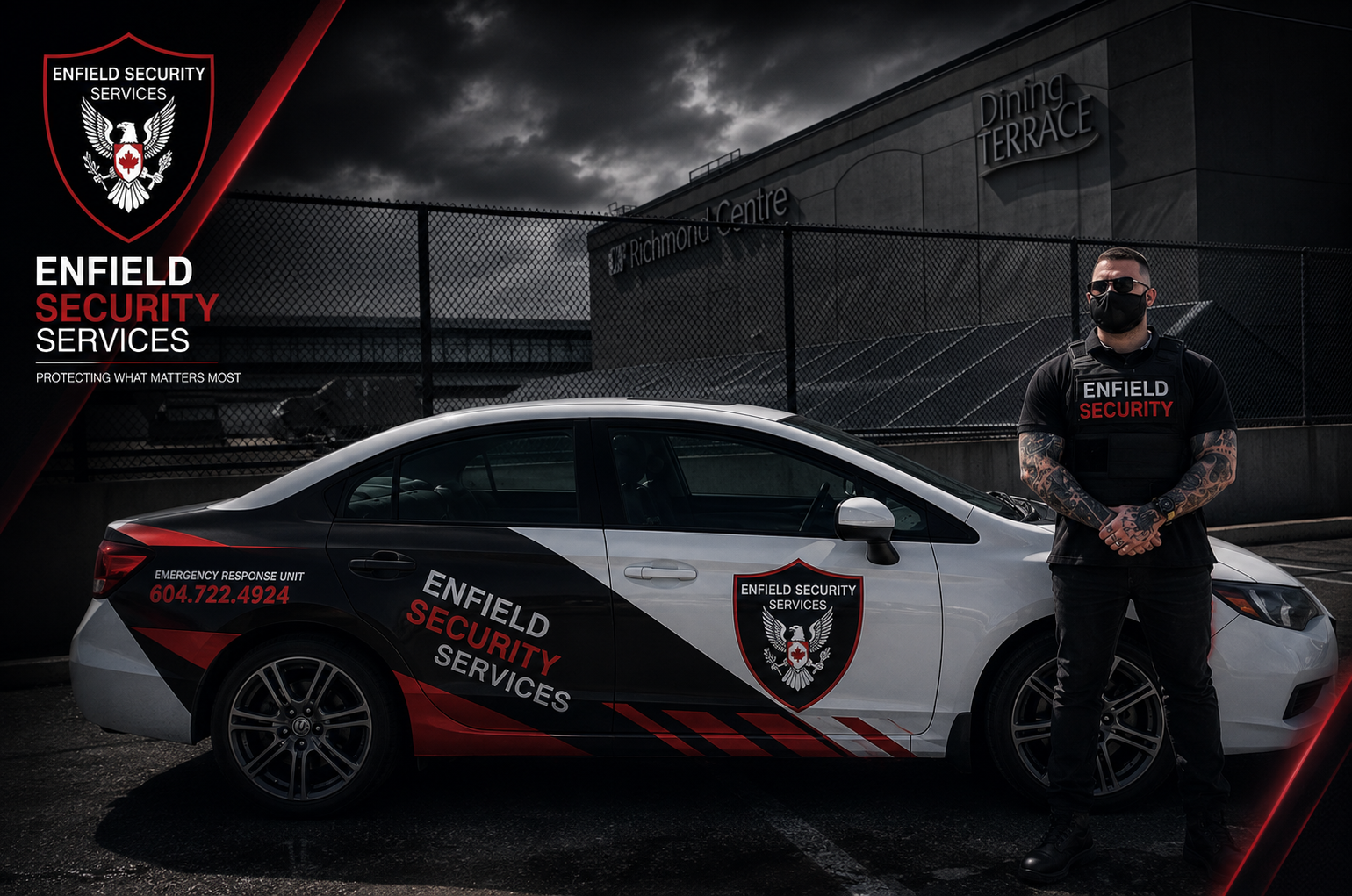
Choosing the right security strategy is not always about having a guard at a property 24/7. For many commercial, residential and industrial properties, mobile patrol security offers a more flexible and cost-effective solution.
However, property owners and managers often face an important question:
Should you choose scheduled mobile patrols or random mobile patrols?
Both strategies can play an important role in protecting a property. Scheduled patrols provide consistency and predictable security coverage, while random patrols create uncertainty that can make it more difficult for potential criminals to predict when security will arrive.
So, which option is better?
The answer depends on your property, security risks, operating hours and the type of protection you need. In many cases, the strongest security strategy is actually a combination of both.
In this guide, we compare scheduled vs random mobile patrols, explain how each strategy works and help Calgary property owners understand which approach may be right for their security needs.
Quick Answer: Scheduled vs Random Mobile Patrols
| Security Strategy | Best For | Main Advantage | Potential Limitation |
|---|---|---|---|
| Scheduled Patrols | Properties needing routine checks | Consistent and documented security visits | Visit times may become predictable |
| Random Patrols | Properties concerned about criminal activity | Creates uncertainty for potential offenders | Coverage timing is less predictable |
| Combined Patrols | Higher-risk or larger properties | Balances consistency and unpredictability | Requires proper security planning |
The best approach for many properties is a combination of scheduled and random mobile patrols. Scheduled checks ensure essential security tasks are completed, while random visits make the patrol pattern more difficult to predict.
How Do Random Mobile Patrols Work?
Random mobile patrols are designed to make security activity less predictable.
Instead of arriving at exactly the same time every night, patrol officers visit the property at varying times and intervals.
For example, a patrol officer might visit:
- 9:15 PM one night
- 11:40 PM the following night
- 1:20 AM on another night
- Multiple times during a high-risk period
The goal is simple:
Potential criminals should not be able to easily predict when a security patrol will arrive.
Random patrols can create uncertainty around a property. Someone considering trespassing, vandalism or other suspicious activity may not know whether a security vehicle could arrive within minutes.
This unpredictability can be an important part of a broader property security strategy.
What Are Scheduled Mobile Patrols?
Scheduled mobile patrols follow a predetermined security plan. Security officers visit a property at planned intervals during specific periods.
For example, a security company may schedule patrols:
- Every night at specific intervals
- At opening and closing times
- Every few hours
- During overnight periods
- Before and after business operations
- At predetermined high-risk times
Each visit can include specific security checks depending on the property’s requirements.
A typical scheduled mobile patrol may involve:
- Inspecting doors and windows
- Checking gates and perimeter areas
- Looking for signs of forced entry
- Inspecting vehicles or parking areas
- Checking for suspicious activity
- Verifying that alarms or access points appear secure
- Performing lock and unlock services
- Reporting security concerns to the property manager
Scheduled patrols are particularly useful when a property requires routine and documented security checks.
Advantages of Scheduled Mobile Patrols
1. Consistent Security Coverage
Scheduled patrols ensure that a property receives security checks at planned intervals.
This can be particularly important for:
- Commercial buildings
- Residential communities
- Construction sites
- Warehouses
- Office complexes
- Industrial properties
Property managers know that important security tasks are being performed regularly.
2. Better Routine Security Management
Some properties have specific security requirements that need to happen at particular times.
For example:
- Locking a commercial building after closing
- Checking an access gate at night
- Inspecting a vacant property
- Opening or securing a facility in the morning
Scheduled patrols make it easier to organize these routine responsibilities.
3. Easier Documentation and Reporting
A structured patrol plan can support detailed security reporting.
Depending on the security provider, reports may document:
- Patrol arrival time
- Areas inspected
- Security concerns identified
- Incidents observed
- Actions taken by the patrol officer
This can help property managers maintain better visibility over security activity.
4. Suitable for Predictable Property Risks
Some properties experience security concerns at specific times.
For example:
- A retail property may require checks after closing.
- A warehouse may need overnight inspections.
- A construction site may require patrol coverage when workers leave.
- An office building may need a scheduled lockup service.
In these situations, scheduled mobile patrols provide a structured response to known security requirements.
Limitations of Scheduled Mobile Patrols
The biggest potential limitation is that a completely fixed patrol pattern can become predictable.
If unauthorized individuals observe a property for an extended period, they may begin to notice a routine.
For example:
If a patrol vehicle arrives every night at exactly 10:00 PM, someone may eventually learn the pattern.
This does not mean scheduled patrols are ineffective. It simply means that a security strategy should consider whether patrol timing needs additional variation.
For higher-risk properties, combining scheduled responsibilities with random patrol visits may provide stronger coverage.
Advantages of Random Mobile Patrols
1. Unpredictability
The biggest advantage of random mobile patrols is unpredictability.
Potential criminals cannot easily determine:
- When the next patrol will arrive
- How long a patrol officer will remain on site
- Whether multiple patrols may occur
- Which areas of the property will be inspected
This uncertainty can make a property less attractive to individuals looking for predictable security gaps.
2. Stronger Deterrence Strategy
Visible security activity can contribute to a property’s overall deterrence strategy.
A marked patrol vehicle or uniformed security officer arriving at unpredictable times can create uncertainty for people considering unauthorized activity.
Random patrols may be especially useful for properties that are:
- Vacant
- Closed overnight
- Located in isolated areas
- Large or spread across multiple buildings
- Frequently targeted by trespassers or vandals
3. Difficult to Study the Patrol Pattern
A predictable security routine may allow someone to identify gaps between patrol visits.
Random patrol scheduling makes this more difficult.
For example, instead of assuming security arrives every two hours, an individual cannot easily predict whether a patrol will arrive in 20 minutes or several hours.
4. Flexible Response to Changing Risks
Random patrol frequency can sometimes be adjusted based on changing security concerns.
A property experiencing increased suspicious activity may benefit from more frequent or varied patrol visits during certain periods.
This flexibility can be valuable when security risks change over time.
Limitations of Random Mobile Patrols
Random patrols are highly useful for unpredictability, but they may not be ideal as the only security strategy for every property.
For example, some tasks must happen at specific times.
A building may require:
- A guaranteed lockup check
- A scheduled opening service
- A specific perimeter inspection
- Regular compliance checks
A completely random patrol strategy may not guarantee these activities occur at the exact required times.
That is why many properties use random patrols alongside scheduled security responsibilities.
Scheduled vs Random Mobile Patrols: Property Examples
Different properties have different security requirements.
Here are some examples.
Commercial Office Buildings
Recommended Strategy:
Scheduled + Random Patrols
A scheduled patrol may:
- Secure the building after business hours
- Check access points
- Inspect parking areas
Random patrols can then occur throughout the night.
This creates both reliable routine coverage and unpredictable security activity.
Construction Sites
Construction sites often contain valuable equipment, materials and tools.
Recommended Strategy:
Primarily Random Patrols with Scheduled Checks
A scheduled patrol may perform an initial perimeter inspection after workers leave.
Random patrol visits throughout the night can then help make security activity less predictable.
Residential Communities and Condominium Properties
Residential properties may require security coverage during specific hours while also benefiting from unpredictable patrol patterns.
Recommended Strategy:
Combination Approach
Scheduled patrols may focus on:
- Parking areas
- Building entrances
- Common areas
- Access points
Random patrols can provide additional coverage during late-night hours.
Warehouses and Industrial Properties
Large industrial properties may have multiple access points and significant areas to monitor.
Recommended Strategy:
Scheduled Security Checks + Random Perimeter Patrols
Scheduled checks can ensure critical areas are inspected, while random patrols provide additional coverage across the property.
Vacant Properties
Vacant buildings can become targets for:
- Trespassing
- Vandalism
- Theft
- Unauthorized entry
Recommended Strategy:
Frequent Random Mobile Patrols
Random visits can be particularly valuable because individuals monitoring the property cannot easily predict when security will arrive.
When Should You Combine Scheduled and Random Patrols?
For many Calgary properties, a combined strategy can provide the strongest balance.
Here is a simple example.
Sample Mobile Patrol Scenario
7:00 PM — Scheduled Patrol
- Property closing inspection
- Doors and access points checked
- Parking areas inspected
9:30 PM — Random Patrol
- Perimeter inspection
- Suspicious activity check
12:15 AM — Random Patrol
- Vehicle and gate inspection
- Additional perimeter check
2:45 AM — Random Patrol
- Access points checked
- Patrol of high-risk areas
6:00 AM — Scheduled Patrol
- Final property inspection
- Opening or security verification
This approach ensures essential tasks are completed while preventing the entire security schedule from becoming predictable.
How to Choose the Right Mobile Patrol Strategy
Before choosing between scheduled vs random mobile patrols, consider the following questions.
1. What Type of Property Do You Have?
Different properties face different risks.
A warehouse, residential complex and construction site may all require different patrol strategies.
2. When Is the Property Most Vulnerable?
Consider:
- Overnight hours
- Weekends
- Holidays
- Closing hours
- Periods when the property is vacant
Understanding high-risk periods can help determine when patrol coverage is needed.
3. Are There Specific Tasks That Must Be Completed?
If your property requires a guaranteed security check at a specific time, scheduled patrols may be necessary.
Examples include:
- Locking doors
- Checking gates
- Opening facilities
- Verifying security systems
4. Is Unpredictability Important?
If the property has experienced trespassing, vandalism or repeated suspicious activity, random patrol timing may be an important consideration.
Sample Patrol Strategies for Different Security Needs
| Property Security Need | Recommended Patrol Strategy |
|---|---|
| Routine building checks | Scheduled patrols |
| Unpredictable overnight coverage | Random patrols |
| Property opening and closing | Scheduled patrols |
| High-risk vacant property | Random + frequent patrols |
| Large commercial property | Combined strategy |
| Construction site | Scheduled + random coverage |
| Residential community | Combination strategy |
| Warehouse or industrial facility | Combined strategy |
Scheduled vs Random Mobile Patrols: Which Is the Better Choice?
There is no single patrol strategy that works perfectly for every property.
Scheduled mobile patrols are ideal when consistency, routine checks and specific security tasks are required.
Random mobile patrols are valuable when unpredictability and flexible security coverage are important.
For many commercial, residential and industrial properties, the best solution is a combined mobile patrol strategy.
A customized security plan can include scheduled checks for essential responsibilities while adding random patrols to create a less predictable security presence.
The goal is not simply to have security visit a property. The goal is to create a patrol strategy that matches the property’s actual risks.
Protect Your Property With a Customized Mobile Patrol Plan
If you are looking for a flexible security strategy for your property, Enfield Security Services can help assess your security requirements and develop a patrol plan based on your property’s needs.
Whether you require scheduled inspections, random mobile patrols or a combination of both, a customized security approach can help provide more effective property protection.
Explore our Mobile Patrol Security services and discuss the right patrol strategy for your property.