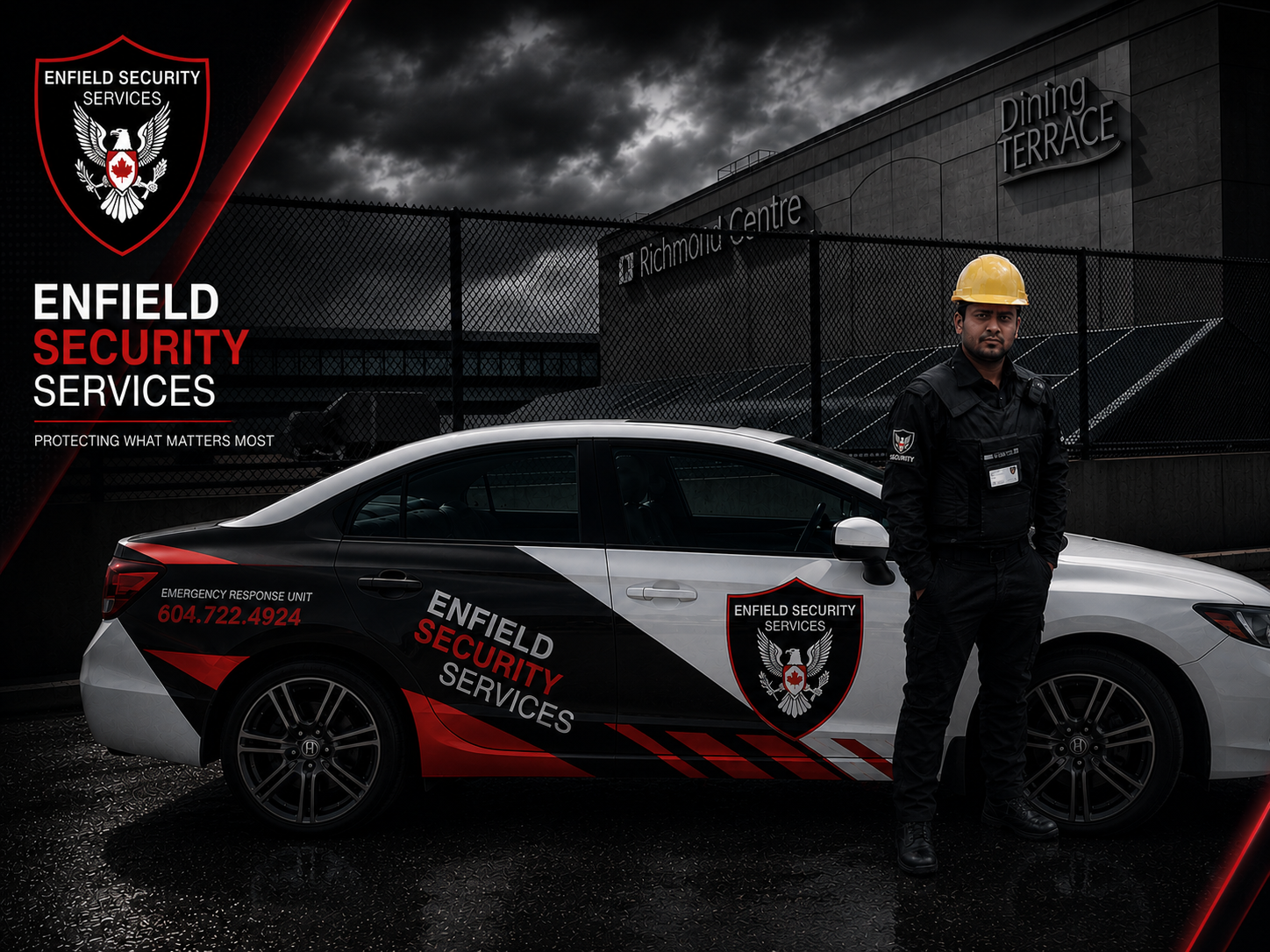
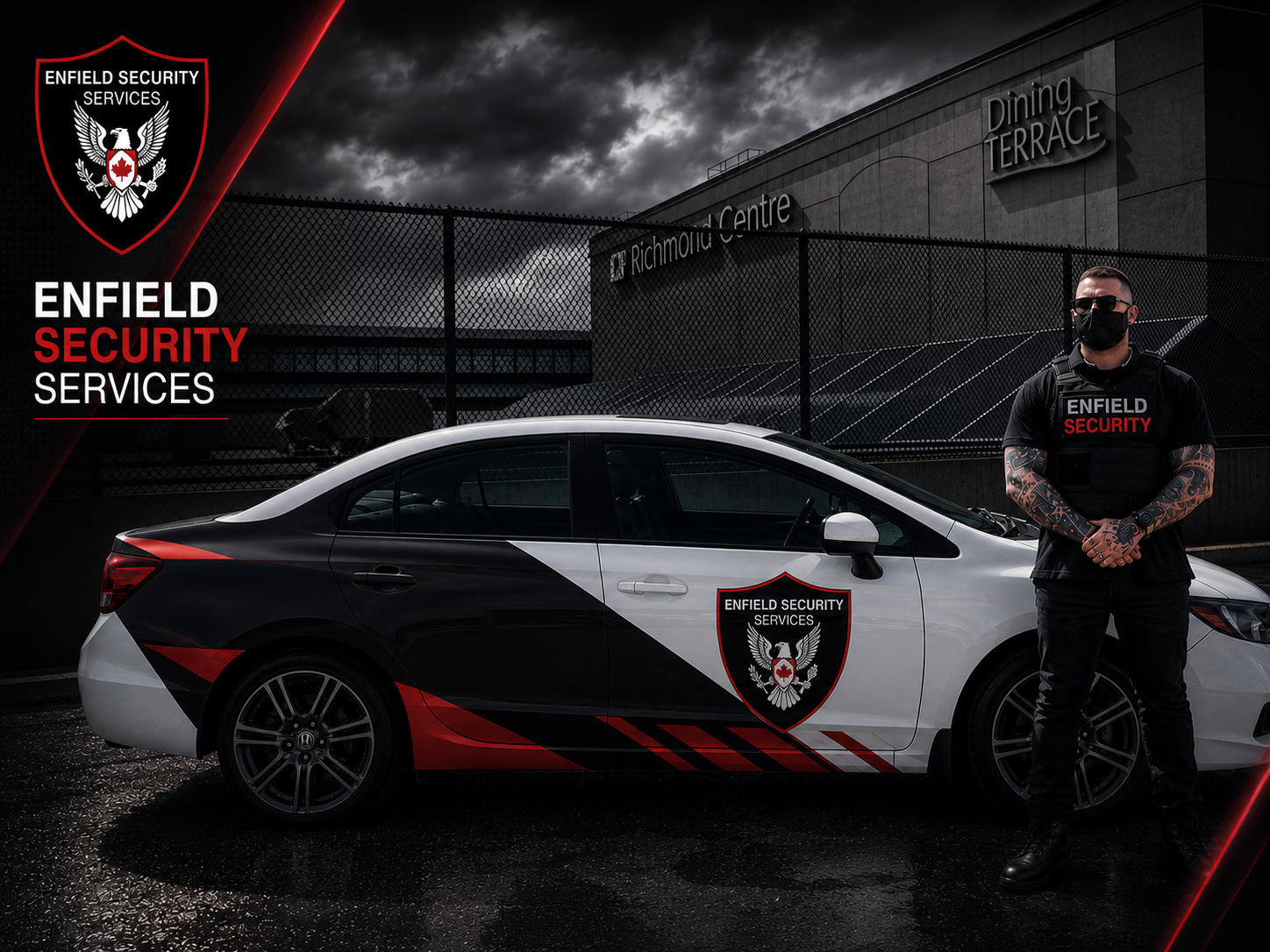
Mobile Patrols
Mobile Patrol Security Calgary
Fast, Visible Security That Stops Problems Before They Become Losses
Your property doesn’t need security only when someone breaks in. It needs security when a thief is deciding whether your building is worth targeting.
That decision often takes less than a minute.
An unlocked service gate, a dark parking area, expensive equipment left outside, or a building that appears empty after business hours can quickly become an opportunity. Mobile patrol security changes that by making your property unpredictable to criminals and reassuring to employees, tenants, and visitors.
At Enfield Security Services, our Mobile Patrol Security Calgary team provides highly visible vehicle patrols, random inspections, alarm response, lock-up and unlock services, parking lot patrols, perimeter inspections, and incident reporting across Calgary. Every patrol is designed around your property’s risks—not a generic checklist.
Whether you manage a construction project in the northeast, a retail plaza in the southwest, a warehouse in the southeast industrial area, or a condominium in downtown Calgary, our patrol plans are customized to match how your property operates.

Security Problems Don’t Start With a Break-In
Most property losses happen long before police are called.
They begin with small warning signs that often go unnoticed:
- Delivery gates left open
- Contractors forgetting to secure equipment
- Individuals repeatedly walking around the property
- Vehicles entering after business hours
- Damaged fencing
- Graffiti appearing in hidden locations
- Storage containers left unlocked
- Poor lighting around loading areas
- Unauthorized parking
- People testing emergency exits
These early indicators give criminals confidence that a property is easy to target.
A professional mobile patrol officer identifies these risks before they become expensive incidents.
Instead of reacting after damage occurs, patrol officers actively reduce opportunities for theft, vandalism, trespassing, and property damage.\
Why Calgary Properties Need Mobile Patrol Security
Calgary continues to expand with new residential developments, industrial parks, commercial centres, logistics hubs, and infrastructure projects.
Growth creates opportunity—but it also creates security challenges.
Large properties often have:
- Multiple access points
- Overnight vacancies
- Equipment stored outdoors
- Employee parking lots
- Loading docks
- Temporary fencing
- Public walkways
- Shared commercial spaces
Unlike a single entrance office building, these properties cannot be effectively monitored by cameras alone.
Visible patrol vehicles create uncertainty for anyone considering criminal activity because patrol times vary and inspections occur throughout the day and night.
This unpredictability is one of the strongest deterrents available.
Why Choose Mobile Patrol Security Calgary | Toronto?
Cities like Calgary and Toronto experience high commercial activity, growing residential communities, and constant movement—making them prime areas for theft, vandalism, and unauthorized access.
Mobile patrol security offers the perfect balance between visibility, affordability, and effectiveness.
Key Benefits:
-
Prevents criminal activity before it happens
-
Reduces operational security costs
-
Provides 24/7 surveillance coverage
-
Improves tenant and employee safety
-
Ensures faster response times than alarm-only systems
With Enfield Security Services, you gain a security partner that understands the unique risks and compliance requirements across Ontario.
Mobile Patrol vs Static Security Guards
Many businesses assume they need a full-time security guard.
Often, they don’t.
A mobile patrol program can provide strong protection while reducing unnecessary staffing costs.
| Mobile Patrol Security | Static Security Guard |
|---|---|
| Random inspections | Continuous on-site presence |
| Lower operating costs | Higher monthly investment |
| Ideal for multiple locations | Best for one fixed location |
| Visible vehicle deterrence | Fixed observation point |
| Flexible scheduling | Continuous staffing required |
| Rapid alarm response | Limited mobility |
For many Calgary businesses, combining technology with scheduled and random patrols creates a practical balance between protection and cost.
What Happens During Every Mobile Patrol?
A professional patrol is much more than driving around a parking lot.
Each visit follows a structured inspection process based on your property’s layout and risk profile.
Our officers may inspect:
Property Perimeter
The exterior is checked for signs of forced entry, damaged fencing, open gates, suspicious vehicles, or unauthorized access.
Building Entrances
Doors, emergency exits, loading bays, overhead doors, and access points are inspected to confirm they remain secure.
Parking Areas
Officers monitor:
- Suspicious vehicles
- Abandoned vehicles
- Unauthorized parking
- Loitering
- Poor lighting
- Unsafe conditions
Equipment Storage Areas
Construction materials, generators, fuel tanks, trailers, heavy machinery, and storage containers are inspected for tampering.
Common Areas
Patrol officers look for:
- Graffiti
- Property damage
- Fire hazards
- Water leaks
- Unsafe obstacles
- Broken windows
- Signs of forced entry
Activity Verification
If contractors, cleaners, maintenance teams, or delivery personnel are working after hours, patrol officers verify authorized access according to site instructions.
The Difference Between Scheduled and Random Patrols
One of the biggest mistakes businesses make is requesting security at exactly the same time every night.
Predictable patrols become easy to avoid.
Effective patrol programs combine two approaches.
Scheduled Patrols
Ideal for:
- Lock-up inspections
- Morning opening checks
- Employee arrival periods
- Shift changes
- Delivery windows
These visits ensure important operational tasks are completed consistently.
Random Patrols
Random patrols occur at varying times throughout the day and night.
Because no predictable pattern exists, criminals cannot determine when security will arrive.
This significantly increases perceived risk.
For many commercial properties, random patrols produce stronger deterrence than fixed schedules alone.
Patrol Strategies Built Around Different Property Types
Every property has different vulnerabilities.
Instead of using one standard checklist, patrol plans should match the daily operation of the site.
Commercial Office Buildings
Common concerns include:
- Unauthorized visitors
- Parking lot safety
- Employee arrival
- Building lock-up
- Weekend vacancy
- Emergency exits
Patrols focus on entrances, elevators, parking structures, loading docks, and exterior access points.
Retail Shopping Centres
Retail properties experience changing risks throughout the day.
Morning inspections focus on property readiness.
Afternoon patrols monitor customer activity.
Evening patrols reduce loitering, theft, and vandalism after stores close.
Parking areas receive additional attention during peak shopping periods.
Retail Shopping Centres
Retail properties experience changing risks throughout the day.
Morning inspections focus on property readiness.
Afternoon patrols monitor customer activity.
Evening patrols reduce loitering, theft, and vandalism after stores close.
Parking areas receive additional attention during peak shopping periods.
Industrial Facilities
Industrial properties contain valuable equipment, fleet vehicles, inventory, and restricted operational areas.
Patrol officers inspect:
- Shipping yards
- Loading docks
- Fuel storage
- Equipment compounds
- Employee entrances
- Warehouse access points
These inspections reduce opportunities for equipment theft and unauthorized entry.
Apartment Communities
Residential properties require a balance between visibility and respectful community interaction.
Officers patrol:
- Underground parking
- Visitor parking
- Mailrooms
- Building entrances
- Outdoor amenities
- Walkways
- Bicycle storage
- Garbage enclosures
This helps improve resident confidence while discouraging unwanted activity.
Construction Sites
Construction sites change daily.
Materials arrive.
Equipment moves.
Temporary fencing changes.
New access points appear.
Each patrol adapts to current site conditions rather than relying on yesterday’s inspection route.
Officers inspect:
- Heavy equipment
- Material storage
- Temporary offices
- Fuel tanks
- Portable lighting
- Perimeter fencing
- Crane access zones
- Contractor parking
Because construction environments evolve rapidly, flexible patrol planning becomes essential.
Visible Security Changes Behaviour
Security cameras record what happened.
Mobile patrols influence what happens next.
When a marked patrol vehicle enters a property:
- Trespassers often leave immediately.
- Loitering decreases.
- Employees feel safer leaving work after dark.
- Visitors recognize active security measures.
- Criminals lose confidence that the property is unattended.
This psychological deterrent is one of the strongest advantages of mobile patrol services.
Security Decisions Based on Observation, Not Assumptions
Professional patrol officers document what they actually see—not what they expect to find.
Each patrol may include observations such as:
- Gate secured after delivery
- Fence damage requiring repair
- Lighting outage near rear entrance
- Graffiti requiring removal
- Water leak near mechanical room
- Suspicious vehicle monitored
- Contractor access verified
- Emergency exit blocked
- Dumpster area unsecured
- Snow accumulation creating safety concerns
These observations help property managers resolve issues before they become larger operational or liability problems.
Mobile Patrol Security That Works Around Your Schedule
Whether your property requires one nightly inspection, multiple random patrols, alarm response, weekend security, or a combination of services, our Calgary mobile patrol team develops a schedule that aligns with your operational needs rather than forcing your business into a one-size-fits-all plan.
Every patrol is focused on reducing risk, improving visibility, and providing documented proof that your property is actively monitored.
How GPS-Verified Mobile Patrols Improve Accountability
One of the biggest questions property owners ask is:
“How do I know the patrol actually happened?”
A professional mobile patrol service should provide more than a vehicle driving past your property. Every visit should be documented with clear evidence that the inspection was completed.
Modern patrol operations use GPS technology to verify officer locations, patrol routes, and inspection times. This creates a digital record that confirms where officers were, when they arrived, and what they inspected.
For businesses managing multiple locations across Calgary, GPS verification eliminates uncertainty and provides a reliable record for security audits, insurance discussions, and property management.
A detailed patrol report may include:
- Arrival and departure time
- GPS-confirmed patrol location
- Exterior inspection findings
- Gate and fence status
- Building access checks
- Lighting inspection
- Parking lot observations
- Weather-related concerns
- Photos of any unusual activity
- Actions taken by the patrol officer
Rather than receiving a simple “site checked” message, property managers receive meaningful information that helps them make informed decisions.
Alarm Response: What Happens When an Alarm Is Triggered?
An alarm tells you something happened.
A mobile patrol officer determines what actually happened.
Without a trained responder, alarm notifications often lead to unnecessary stress, false dispatches, or delayed action.
Our alarm response process follows a structured sequence to reduce confusion and protect your property.
Step 1 – Dispatch
Once an alarm is activated, the nearest available patrol unit is dispatched according to the property’s response instructions.
Step 2 – Safe Arrival
Before approaching the building, the officer checks for:
- Forced entry
- Suspicious vehicles
- Broken windows
- Open access points
- Individuals leaving the area
- Damage to perimeter fencing
Officer safety always comes first.
Step 3 – Exterior Assessment
A complete exterior inspection is performed before entering the property.
This includes:
- Doors
- Loading docks
- Emergency exits
- Roof access points
- Service entrances
- Mechanical rooms
- Storage yards
Step 4 – Interior Verification (If Authorized)
If the client has provided authorization, officers inspect the interior for signs of intrusion, damage, fire, water leaks, or safety hazards.
Step 5 – Incident Documentation
If an issue is found, the client receives detailed documentation, including:
- Photographs
- Time of discovery
- Officer observations
- Actions taken
- Recommendations for follow-up
This reduces uncertainty and speeds up decision-making.
Random Patrol Timing: Why Predictability Creates Risk
Criminals often observe a property before attempting theft or vandalism.
They watch for patterns such as:
- Security arriving every evening at 8:00 PM
- Gates being locked at the same time each day
- Delivery schedules
- Employee departures
- Weekend closures
Once these routines become predictable, they create opportunities.
Randomized patrol scheduling breaks those patterns.
Instead of fixed times, patrol visits vary throughout the day and night based on your property’s operational needs.
For example:
- Monday: 9:15 PM and 2:40 AM
- Tuesday: 11:30 PM
- Wednesday: 8:10 PM, 1:20 AM, and 4:45 AM
Because the timing changes, unauthorized individuals cannot confidently predict when security will arrive.
This uncertainty alone discourages many opportunistic crimes.
Mobile Patrol Security During Calgary’s Four Seasons
Security risks don’t remain the same throughout the year.
Weather, daylight hours, and seasonal business activity all influence how patrols should be planned.
Winter
Longer nights increase the time properties remain in darkness.
Patrol officers pay closer attention to:
- Frozen access gates
- Snow-covered emergency exits
- Ice-related slip hazards
- Heating equipment
- Vacant buildings
- Reduced visibility around storage yards
Heavy snowfall can also hide signs of forced entry or damage, making routine inspections even more important.
Spring
Construction projects accelerate across Calgary.
Patrols focus on:
- New material deliveries
- Temporary fencing changes
- Fuel storage
- Equipment movement
- Contractor access
- Mud-covered perimeter breaches
Construction activity often changes daily, requiring flexible inspection routes.
Summer
Extended daylight increases public activity around commercial properties.
Patrol officers monitor:
- Parking lots
- Public gathering areas
- Outdoor equipment
- Rooftop access
- Vacant office buildings during holidays
Retail centres and apartment communities often see increased evening activity during warmer months.
Fall
As daylight decreases, businesses prepare for winter operations.
Patrols help identify:
- Lighting failures
- Tree damage affecting fences
- Storm-related property damage
- Drainage concerns
- Unsecured seasonal equipment
Small maintenance issues identified during fall inspections can prevent larger safety problems during winter.
High-Risk Areas That Deserve Extra Patrol Attention
Not every part of a property carries the same level of risk.
Experienced patrol officers focus on locations where unauthorized access is most likely to occur.
These include:
Rear Service Lanes
Often hidden from public view, these areas can become entry points for theft or vandalism if left unchecked.
Loading Docks
Loading docks frequently contain valuable inventory awaiting shipment or installation. Regular inspections reduce opportunities for cargo theft.
Utility Rooms
Electrical panels, generators, HVAC systems, and communication equipment are attractive targets for vandalism and copper theft.
Rooftop Access
Commercial rooftops can provide unauthorized entry into office buildings, retail centres, and warehouses.
Waste Disposal Areas
Dumpster enclosures and recycling compounds are common locations for trespassing and illegal dumping.
Equipment Storage Compounds
Generators, trailers, compressors, and heavy machinery require regular inspection, especially after business hours.
Calgary Businesses Have Different Security Needs
A patrol strategy that works for a retail plaza may be ineffective for an industrial warehouse or residential complex.
That’s why patrol planning begins with understanding how the property operates—not simply how large it is.
Distribution and Logistics Facilities
Shipping yards rarely remain inactive.
Even outside business hours, trailers, freight, and fleet vehicles may be present.
Patrols prioritize:
- Trailer inspections
- Dock door security
- Fleet parking
- Fuel storage
- Perimeter fencing
- Unauthorized vehicle access
Manufacturing Facilities
Manufacturing sites often contain expensive machinery, raw materials, and restricted production areas.
Patrol officers monitor:
- Equipment yards
- Employee entrances
- Chemical storage
- Maintenance workshops
- Utility infrastructure
Routine inspections help reduce operational disruptions caused by theft or unauthorized access.
Medical and Professional Buildings
Healthcare clinics and office complexes require a balance between accessibility and security.
Patrols focus on:
- Patient parking
- Building access after hours
- Pharmacy delivery points
- Emergency exits
- Visitor safety
Visible patrols also help create a greater sense of security for staff working late shifts.
Understanding the Timeline of Property Crime
Many security incidents follow a predictable progression.
Recognizing these early stages allows businesses to intervene before losses occur.
Stage 1: Observation
An individual repeatedly visits the property, noting routines, access points, lighting, and patrol schedules.
Stage 2: Testing
Small actions—such as checking whether a gate is locked or entering a parking area after hours—are used to gauge how quickly someone responds.
Stage 3: Opportunity
If no response occurs, the property is perceived as vulnerable.
Stage 4: Incident
The individual returns to steal equipment, damage property, or gain unauthorized entry.
Stage 5: Repeat Activity
Properties that remain unprotected often experience repeated incidents because offenders assume the risks remain low.
Consistent mobile patrols interrupt this cycle by increasing visibility, reducing predictability, and responding to suspicious behaviour before it escalates.
Visible Security Protects More Than Property
Businesses often invest in patrol services to reduce theft, but the benefits extend much further.
An active patrol program can also help:
- Improve employee confidence during late-night shifts
- Encourage safer visitor experiences
- Reduce liability risks
- Identify maintenance issues early
- Support emergency response efforts
- Deter vandalism and unauthorized access
- Document site conditions for insurance or property management
Security becomes part of the property’s overall operational strategy rather than a response to isolated incidents.
Calgary Mobile Patrol Planning: Every Property Needs a Different Strategy
One of the biggest mistakes businesses make is assuming every property needs the same patrol schedule.
A warehouse operating 24/7 faces different risks than a professional office that closes at 5:00 PM. Likewise, a construction project changes every week as new materials arrive, fencing is moved, and subcontractors rotate on and off site.
An effective mobile patrol plan begins with one question:
“What is most valuable on this property, and when is it most vulnerable?”
That answer shapes everything—from patrol frequency to inspection priorities and response procedures.
Mobile Patrol Recommendations by Property Type
Commercial Office Buildings
Office buildings are most vulnerable outside business hours when parking lots are empty and cleaning crews or contractors are the only people on-site.
A patrol plan typically focuses on:
- Building lock-up verification
- Exterior lighting inspections
- Emergency exit checks
- Underground parking patrols
- Suspicious vehicle monitoring
- Weekend vacancy inspections
The goal is to identify problems before employees return the next morning.
Construction Projects
Construction sites are among Calgary’s most frequently targeted properties because equipment, tools, fuel, and materials remain outdoors for extended periods.
Instead of checking only the perimeter, patrol officers inspect changing work zones every visit.
Inspection priorities include:
- Newly delivered building materials
- Copper wiring and electrical supplies
- Portable generators
- Fuel storage tanks
- Temporary offices
- Shipping containers
- Crane access areas
- Temporary fencing adjustments
As construction progresses, the patrol route evolves with the project.
Retail Shopping Centres
Retail risks change throughout the day.
Morning patrols verify the property is ready to open.
Evening patrols focus on closing procedures.
Late-night patrols reduce opportunities for vandalism, graffiti, illegal dumping, and parking lot incidents.
Officers also monitor:
- ATM locations
- Outdoor seating
- Service corridors
- Delivery entrances
- Loading areas
- Waste collection zones
Warehouses and Distribution Centres
Warehouses often contain inventory worth hundreds of thousands of dollars.
Security priorities include:
- Trailer yards
- Dock doors
- Inventory storage
- Employee entrances
- Fleet parking
- Fuel tanks
- Shipping compounds
These inspections help reduce cargo theft, unauthorized access, and after-hours activity.
Apartment Communities
Residents expect more than locked doors.
They expect to feel safe walking to their vehicles at night.
Mobile patrols improve security by monitoring:
- Visitor parking
- Underground garages
- Mailrooms
- Building entrances
- Bicycle storage
- Children’s play areas
- Amenity spaces
- Walking paths
Visible patrols also discourage repeated nuisance behaviour without disrupting residents.
Calgary’s Growth Corridors Create New Security Challenges
Calgary continues to expand through new residential communities, commercial developments, industrial parks, and transportation infrastructure.
New development often creates temporary vulnerabilities.
Freshly completed roads, partially occupied commercial buildings, staged construction materials, and vacant units can attract opportunistic theft.
Properties located near active growth corridors should review their patrol strategy regularly as site conditions change.
Rather than relying on a fixed security plan for years, patrol schedules should adapt as occupancy, traffic, and operations evolve.
Mobile Patrol Is More Than Crime Prevention
A patrol officer often becomes the first person to discover issues unrelated to crime.
Examples include:
- Water leaks
- Burst pipes
- Power failures
- Storm damage
- Broken perimeter fencing
- Fallen trees
- Vehicle collisions
- Fire hazards
- Unsafe snow or ice accumulation
- Damaged exterior lighting
Early discovery can significantly reduce repair costs and operational downtime.
Many expensive property losses begin as small maintenance issues that remain unnoticed overnight.
How Mobile Patrol Supports Insurance Risk Management
Insurance providers assess risk based on exposure—not assumptions.
While every policy is different, businesses that demonstrate proactive property management often place themselves in a stronger position during underwriting discussions and claim investigations.
Documented patrol activity can help demonstrate:
- Regular property inspections
- Timely identification of hazards
- Secure access management
- Evidence of preventative security measures
- Incident documentation
- Prompt response to suspicious activity
Maintaining consistent inspection records also helps property managers demonstrate due diligence when investigating incidents or responding to liability concerns.
What Should Be Included in Every Patrol Report?
A valuable patrol report should help a property manager understand the site’s condition without needing to visit the property.
Each report should clearly document:
✔ Arrival and departure times
✔ Areas inspected
✔ Access points checked
✔ Lighting conditions
✔ Weather observations
✔ Equipment inspections
✔ Suspicious activity
✔ Maintenance concerns
✔ Safety hazards
✔ Photographs where appropriate
✔ Actions completed
✔ Recommended follow-up
Clear reporting turns a patrol into actionable operational intelligence.
Common Security Weak Points Businesses Often Miss
Many incidents occur because of small oversights rather than sophisticated criminal activity.
During routine patrols, officers frequently identify issues such as:
- Gates left partially open after deliveries
- Temporary fencing moved but not re-secured
- Loading dock doors left unlocked
- Exterior lights that stopped working
- Storage containers with damaged locks
- Construction materials stacked outside secured compounds
- Employee entrances propped open
- Keys left inside company vehicles
- Unlocked mechanical rooms
- Poor visibility caused by overgrown landscaping
Correcting these issues early often prevents much larger losses.
A Smarter Approach to Mobile Patrol Scheduling
Instead of asking,
“How many patrols do I need?”
Ask,
“When is my property most exposed?”
For example:
A retail plaza may require:
- Opening inspection
- Closing inspection
- Random overnight patrol
A warehouse may benefit from:
- Evening perimeter inspection
- Midnight trailer yard patrol
- Early morning loading dock verification
A construction site may require:
- Sunset patrol
- Midnight inspection
- Pre-shift morning check
The schedule should reflect operational risk—not simply the calendar.
Why Businesses Choose Mobile Patrol Instead of Waiting for an Incident
Waiting until theft occurs is expensive.
Replacing stolen equipment is expensive.
Repairing vandalism is expensive.
Managing insurance claims consumes valuable time.
Delays to construction schedules can affect contractors, suppliers, and project deadlines.
Mobile patrol security helps reduce these disruptions by maintaining a visible, documented security presence before problems escalate.
Why Enfield Security Services?
Choosing a mobile patrol provider is about more than checking boxes on a service list. It’s about partnering with a team that understands how Calgary properties operate after business hours.
Our approach is built around:
- Risk-based patrol planning instead of fixed routes
- GPS-verified patrol accountability
- Professional incident documentation
- Rapid alarm response
- Randomized patrol scheduling
- Experienced mobile security officers
- Scalable security for single or multiple locations
- Local knowledge of Calgary’s commercial, industrial, and residential environments
- Clear communication and responsive client support
We focus on reducing opportunities for theft, vandalism, trespassing, and operational disruption—while giving property owners confidence that their sites are actively monitored.
Request a Mobile Patrol Security Assessment in Calgary
Every property has different risks, different operating hours, and different priorities. That’s why we begin with a conversation—not a one-size-fits-all package.
Whether you manage a construction site, warehouse, office building, retail centre, apartment community, or industrial facility, we’ll help you design a patrol strategy that matches your operations and strengthens your overall security.
Contact Enfield Security Services today to schedule a mobile patrol security assessment in Calgary and discover how proactive patrols can help protect your people, property, and business continuity.
Frequently Asked Questions
How often should a mobile patrol visit my property?
There isn’t a universal schedule. Patrol frequency depends on property size, operating hours, crime exposure, valuable assets, and business activity. Many Calgary businesses combine scheduled inspections with randomized patrols to create a stronger deterrent.
Can mobile patrol officers respond to alarm activations?
Yes. Patrol officers can attend alarm activations, inspect the property, identify signs of forced entry, verify the cause of the alarm, and provide detailed incident reporting based on your response instructions.
Is mobile patrol security suitable for small businesses?
Absolutely. Businesses that don’t require a full-time on-site guard often benefit from mobile patrols because they receive professional security coverage while paying only for scheduled inspections and response services.
Do patrol officers inspect parking lots and surrounding areas?
Yes. Patrols include exterior inspections such as parking lots, loading docks, perimeter fencing, gates, walkways, storage compounds, and other areas identified during the site assessment.
What happens if a patrol officer finds suspicious activity?
The officer follows the property’s response plan, documents observations, secures the area when appropriate, and contacts designated stakeholders or emergency services if immediate action is required.
Can patrol schedules change over time?
Yes. Patrol plans should be reviewed whenever business operations change, new construction phases begin, occupancy increases, or new security risks are identified.
Do you provide reports after patrols?
Yes. We provide detailed digital patrol reports that include:
-
Time-stamped patrol logs
-
Observations
-
Incident details
-
Photos (if required)
This ensures transparency and accountability.
Is mobile patrol security cost-effective?
Yes. Mobile patrol services are one of the most cost-effective security solutions available. You receive professional protection without the expense of hiring full-time on-site guards.
Do you offer mobile patrol services for construction sites?
Yes. Construction sites are one of our core service areas. We protect equipment, materials, and property from theft, vandalism, and unauthorized access.